
Where Light Changes Shape
Between skyline and shoreline

Light behaves differently in the city.
It reflects, sharp and deliberate, off glass and steel, turning streets into something almost staged. You notice it in fragments, in windows, in passing reflections, in the way it never quite settles.
By the coast, it doesn’t reflect.
It spreads.

In the city, light is contained. It hits surfaces at precise angles, steel, glass, brick, creating hard edges and deep shadows. The skyline cuts the sun into sections, and streets funnel it into narrow lines. It moves constantly, but always within limits, shaped by whatever stands in its way.
Around the harbour in Sydney, that control is obvious. Light bounces between water and buildings, held briefly before breaking apart again. The curves of the Sydney Opera House catch it cleanly, while nearby surfaces fall into shadow just as quickly. Nothing stays evenly lit for long.
Time follows that same pattern. It feels segmented, morning light slipping between buildings, midday hitting directly, afternoons stretching shadows across the street. The day moves in parts.
By contrast, the coast is open.
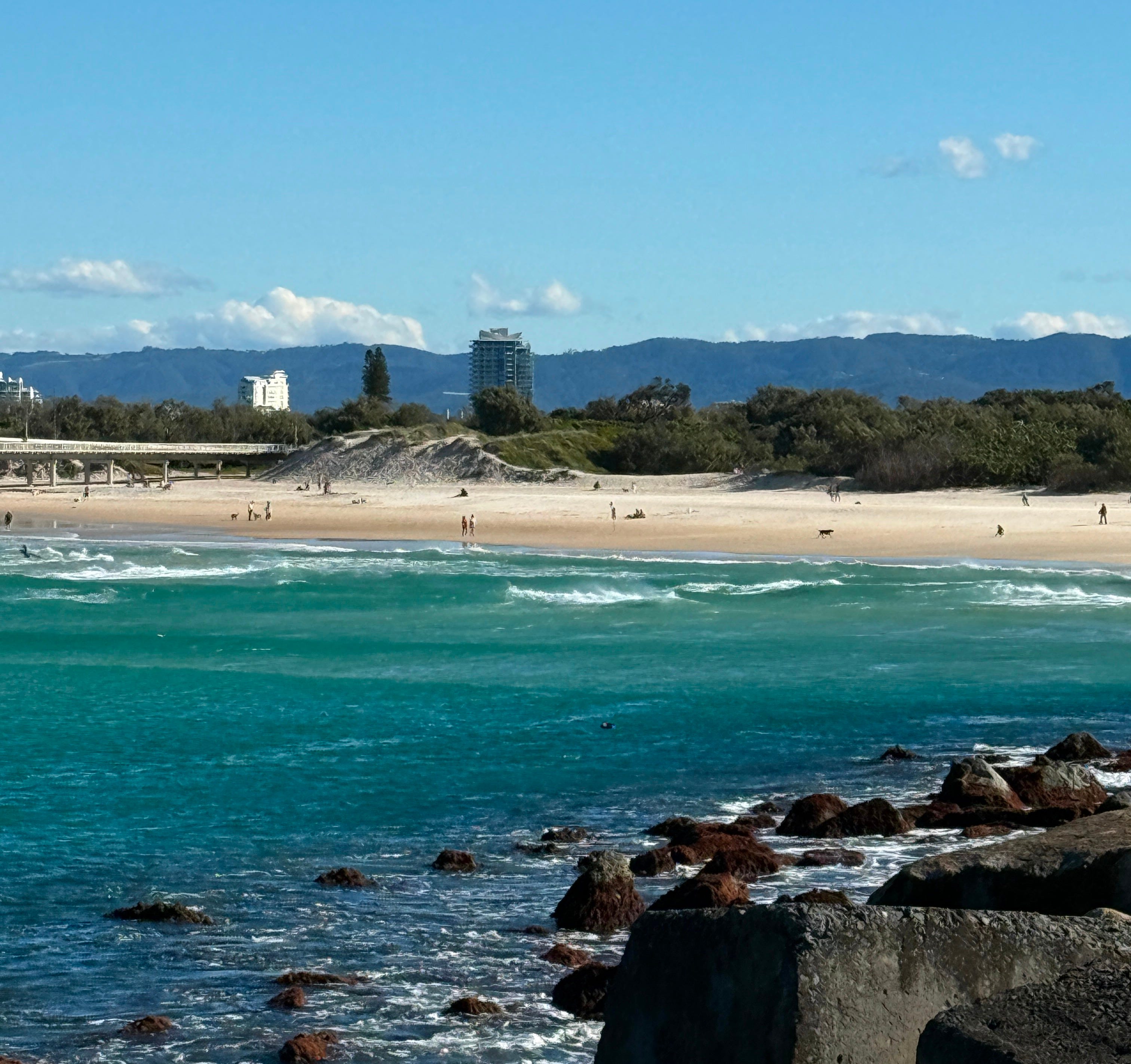
On the Gold Coast, light isn’t cut or redirected. It lands fully, across the ocean, across the sand, across anything in its path. There’s nothing to interrupt it, so it stays wide and continuous.
Buildings exist, but they don’t control it in the same way. The horizon remains open, and the light follows it, uninterrupted. Waves catch it in long, consistent lines. The sand reflects it back without breaking it apart. Everything feels evenly exposed.
Time stretches differently here. Without shadows constantly shifting direction, the day feels less divided. Morning, afternoon, evening, they exist, but they blur into each other. Light changes, but not abruptly. It lingers
Back in the city, structure returns.
In Melbourne, light moves more quietly, but it’s still controlled. It filters through laneways, settles briefly on brick and concrete, then disappears again. Older buildings absorb it rather than reflect it, creating softer contrasts, but the effect is the same, light is shaped by what surrounds it.
Movement adjusts to that. Streets guide direction. Corners interrupt it. You’re always moving through something, not across it.
Along the coast, there’s nothing directing you in the same way.
Movement follows the shoreline, not streets. Back and forth, rather than from one point to another. The space is open enough that direction becomes less important. You move within it, not through it.
The light reinforces that. It doesn’t push you anywhere. It just stays, consistent and present, across everything at once.
Buildings define light in the city.
Space defines it by the coast.
One breaks it apart.
The other lets it remain whole.
And once you notice that, it’s hard not to see it everywhere.
Until the next story,
Kenolie